
Turn a leaderboard into a procurement decision
- 1 · Measure
Read what the benchmark actually tested
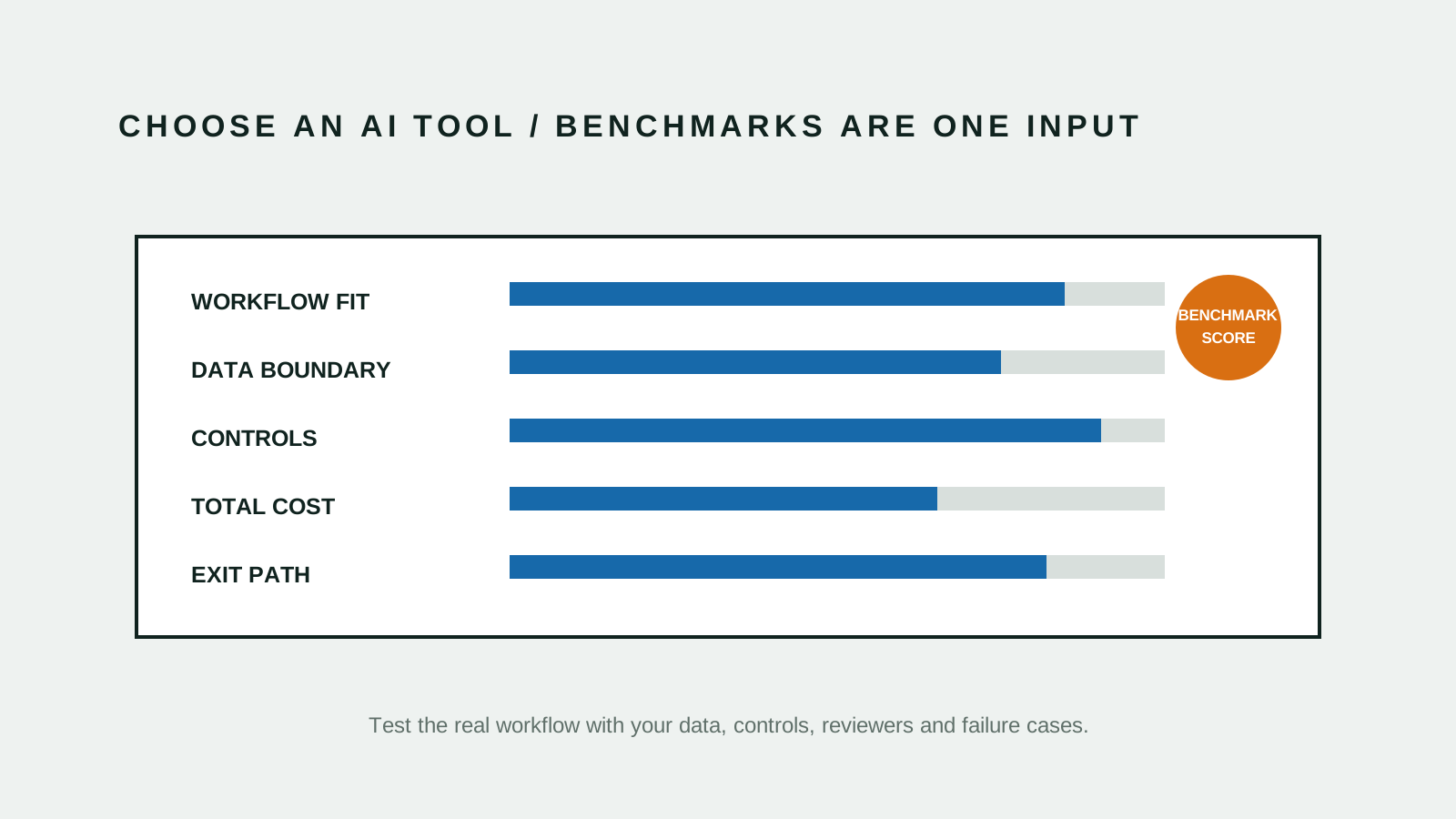
Automated benchmarks need documented tasks, datasets, scoring and reproducible execution to support valid comparisons. A single headline score does not describe your users, data, tools or failure costs.[1]
- 2 · Bound
Trace the data before testing with real cases
Australian privacy obligations can apply to personal information in both inputs and AI-generated outputs. Due diligence should cover intended use, access, human oversight, privacy and security before operational data enters a product.[2]
- 3 · Operate
Buy the control and exit path
Adoption guidance emphasises accountability, impact assessment, risk management, transparency, testing, monitoring and human control. Select the operating system around the model, not only the model demonstration.[3][4]
Define the job before comparing models
Write representative tasks, acceptable outputs, prohibited failures and the reviewer who owns the result. Include the ordinary messy cases that a public benchmark does not see.[1][3]
Compare the smallest tool that can meet that contract. A narrower model or deterministic workflow may be cheaper, easier to govern and more reliable than a higher-scoring general system.[1][3]
Make the data boundary visible
Record what is sent, where it is processed, whether it is retained or used for training, who can access it and how deletion works. Check generated output because it may reproduce or infer personal information.[2][4]
Use synthetic or approved test data until the contract and technical controls are verified. Marketing claims about enterprise security are not a substitute for configuration and read-back evidence.[2][4]
Test the workflow, not a chat window
Measure retrieval, tool calls, citations, latency, reviewer corrections and safe failure inside the intended workflow. Run the same cases against every candidate and retain the outputs for comparison.[1][3]
Include outages, missing evidence, permission errors and model changes. The useful score is whether the business can detect and recover from failure, not whether every response looks polished.[1][3]
- Representative task set
- Data and residency boundary
- Access, audit and retention controls
- Human review and incident path
- Total operating cost
- Export and replacement plan
Price the complete service and its exit
Token price is only one cost. Add integration, retrieval, storage, observability, evaluation, human review, support and incident handling.[3][4]
Keep prompts, test cases, source documents and workflow rules portable where practical. Define how data and logs are exported and deleted so switching suppliers is an executable plan rather than a contract footnote.[3][4]